How Mag Chloride Destroys Bare Concrete (and How to Stop It)
NDOT’s winter de-icer keeps roads safe, but it is brutal on garage floors. Here’s what it does and how coatings help.
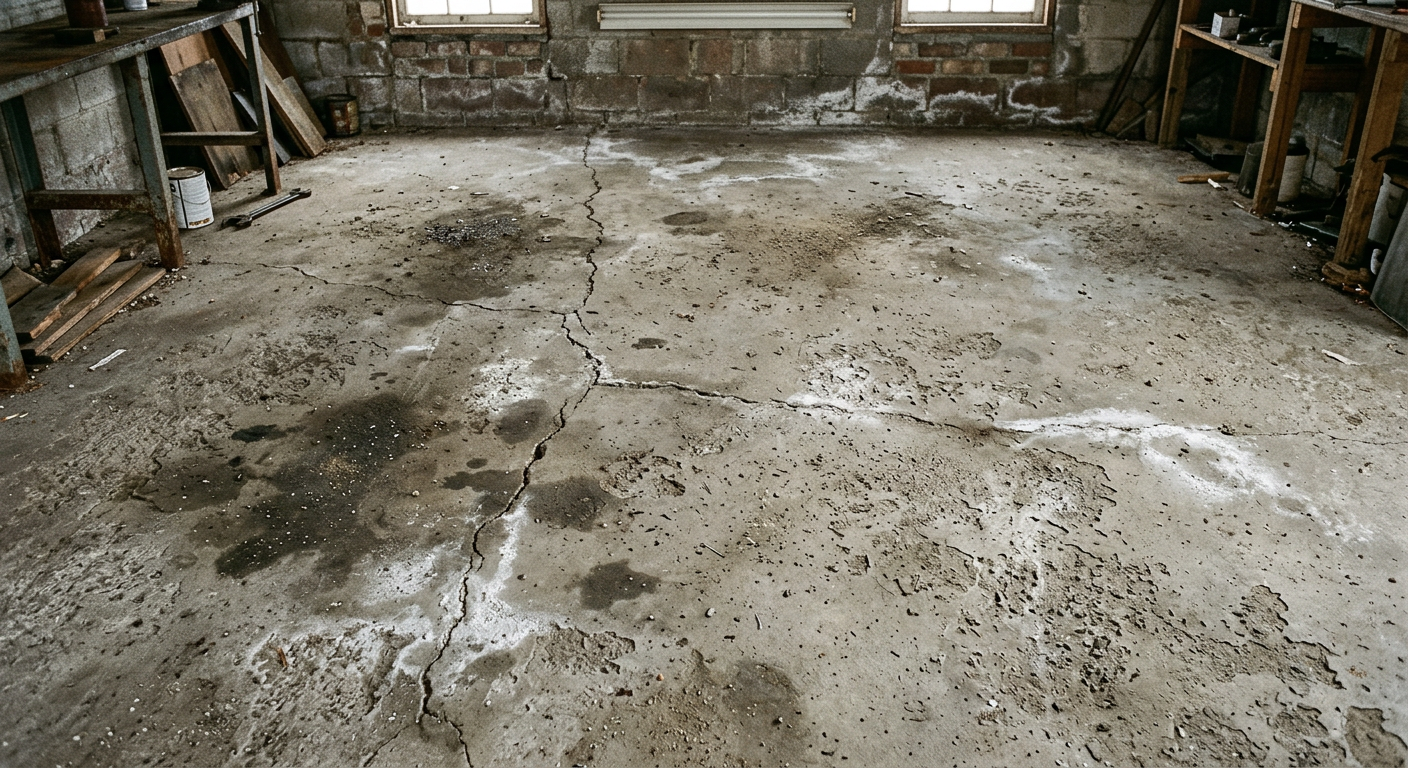
Every winter, magnesium chloride rides into your garage on your tires. As the slush melts, brine soaks into the concrete.
Why it causes spalling
Concrete is porous. Brine wicks in, freezes and thaws, and slowly pops the surface off in flakes and pits. Salts also attract moisture, so the damage keeps going long after the snow is gone.
Signs it is already happening
Look for a white crusty residue near the garage door, a rough sandpaper texture where tires park, and small pits or flakes that grow each spring. The damage almost always starts in the first few feet inside the door.
Sealing the surface
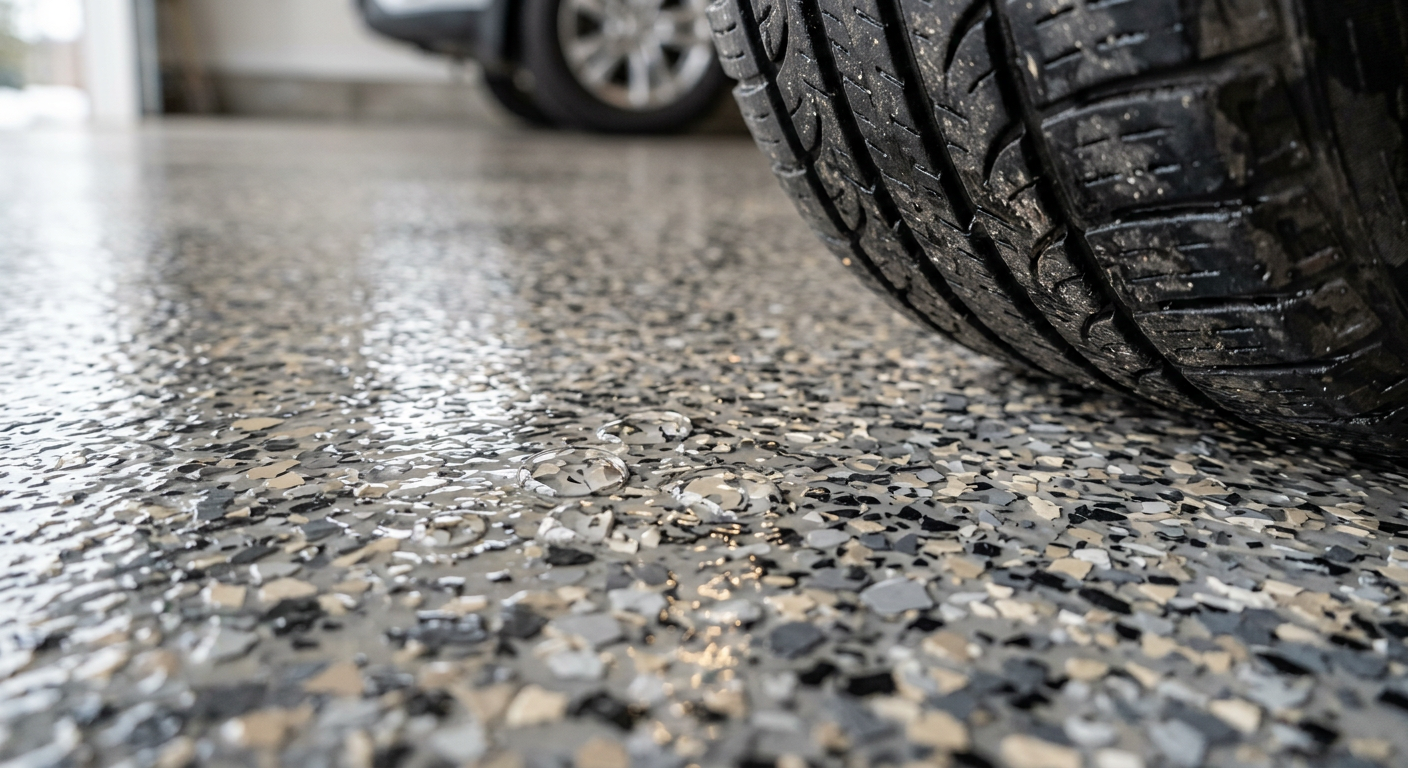
A properly bonded coating closes the pores so brine sits on top, where you can squeegee it out the door. The key word is bonded: coatings on unground concrete can peel and trap moisture underneath.
Already damaged?
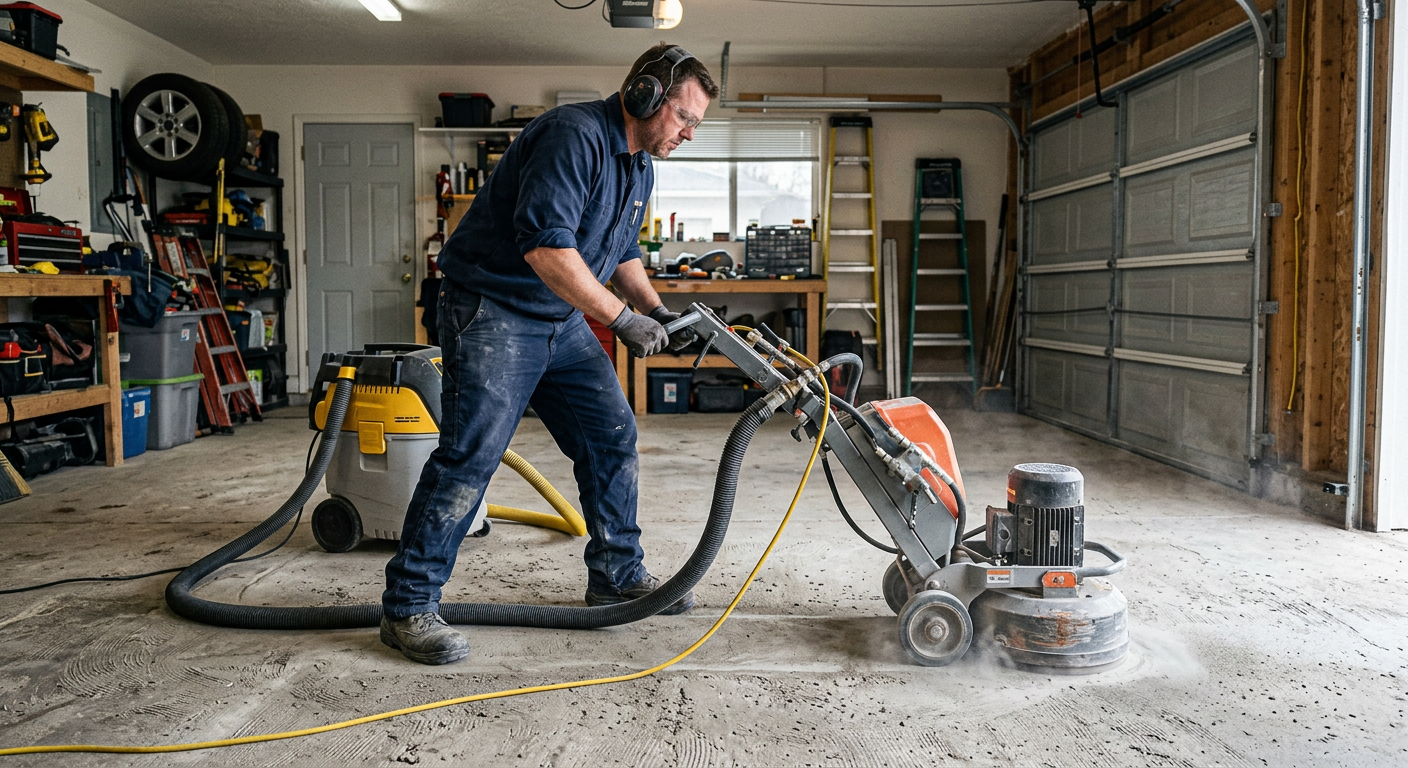
Pitting and shallow spalls can usually be repaired during prep. We grind, fill, and level before coating so the finished floor looks new.