Polyurea vs. Epoxy for Shop and Warehouse Floors
Flexibility, cure time, and chemical resistance compared for auto shops, diesel bays, and warehouses.
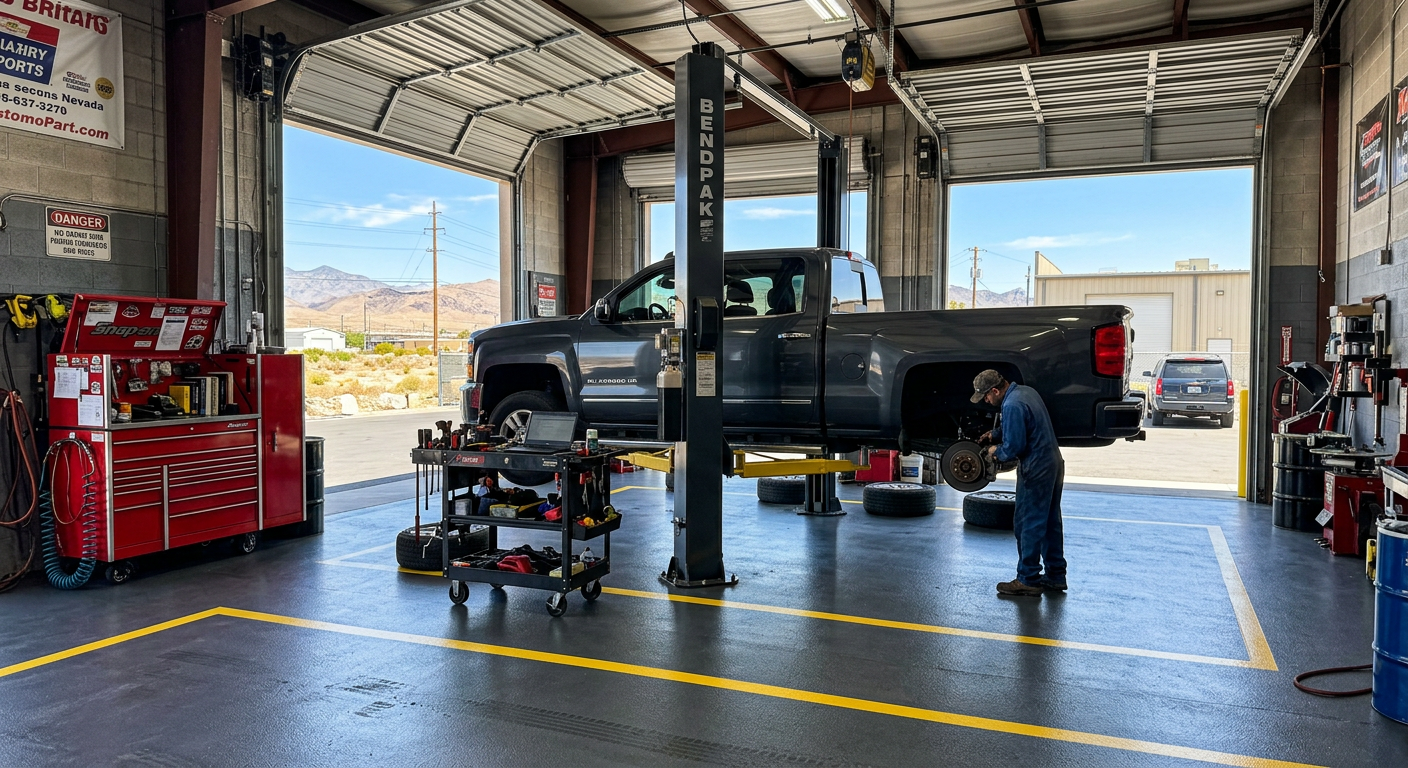
Both polyurea and epoxy can make a great shop floor. The right choice depends on how much abuse the floor takes and how long you can be down.
Impact and flexibility
Epoxy is hard and rigid, which makes it strong but prone to chipping when heavy tools or parts drop. Polyurea is more elastic, so it absorbs impacts and moves with the slab.
Cure time and downtime
Epoxy usually needs several days before heavy use. Polyurea can often return to service the next day, which matters when bays mean billable hours.
Temperature swings
Unheated shops and hangars in Northern Nevada can go from below freezing at night to warm afternoons. Polyurea handles those swings without becoming brittle.
When epoxy still wins
For climate-controlled, lighter-duty spaces where downtime is not critical, high-build epoxy is a cost-effective option. We will recommend based on your actual use.